Building Confidence in Water Quality Through Accreditation

As Africa marked Public Service Day 2026 under the theme "Enhancing Public Sector Institutions and Empowering Multi-Stakeholder Partnerships to Achieve Universal Water Availability and Safe Sanitation by 2063," attention was drawn to one of the continent's most pressing development priorities—ensuring access to safe water and sanitation for all.
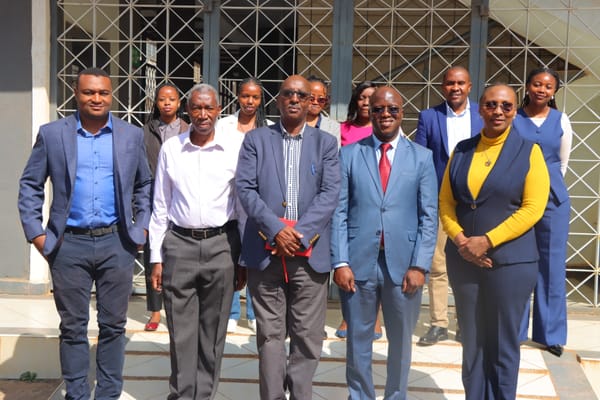
The Kenya Accreditation Service (KENAS) was honoured to participate in the Africa Public Service Day (APSD) 2026 celebrations, joining other public institutions in demonstrating how quality, innovation, and partnerships can contribute to sustainable development and improved service delivery.
Access to safe water is not only a basic human need but also a key driver of public health, economic growth, environmental sustainability, and social development. Yet significant challenges remain across Africa. According to recent global monitoring reports, approximately 845 million people in Sub-Saharan Africa lack access to safely managed drinking water services, while more than 900 million people lack access to safely managed sanitation services. These gaps continue to expose communities to waterborne diseases, environmental degradation, and socio-economic challenges.
The importance of reliable water quality monitoring is further underscored by recurring public health challenges linked to unsafe water and inadequate sanitation. In 2025, Africa experienced its worst cholera outbreak in 25 years, with more than 300,000 reported and suspected cases across the continent, highlighting the critical need for safe water systems and effective monitoring mechanisms.

Where Accreditation Comes In
Achieving universal access to safe water requires more than infrastructure alone. It also requires confidence that water quality measurements, testing results, and monitoring data are accurate, reliable, and technically valid.
This is where accreditation plays a critical role.
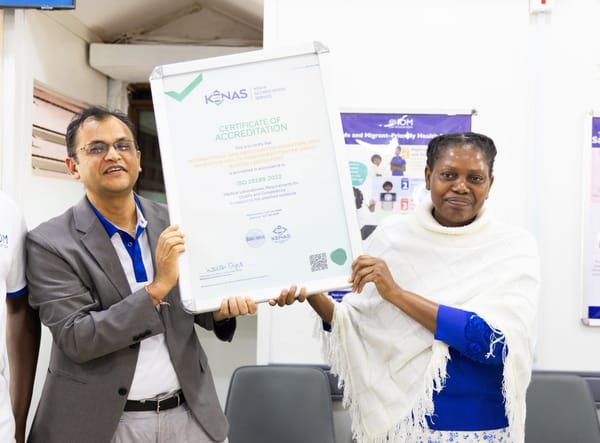
KENAS accredits testing and calibration laboratories against internationally recognized standards, providing assurance that they are competent to perform specific activities. Through accreditation, laboratories demonstrate that they have qualified personnel, validated methods, suitable equipment, and robust quality management systems capable of producing reliable results.
Accredited testing laboratories support water quality monitoring by analysing water samples for microbiological, chemical, and physical parameters. These results help regulators, water service providers, industries, environmental agencies, and policymakers make informed decisions regarding water safety, treatment processes, environmental protection, and public health.
Similarly, accredited calibration laboratories ensure that equipment used in water monitoring and testing produces accurate and traceable measurements. Instruments such as pH meters, conductivity meters, flow meters, thermometers, and analytical equipment must provide dependable readings if decisions on water quality are to be trusted.

Supporting Sustainable Development Goal 6
The United Nations Sustainable Development Goal 6 (SDG 6) calls for ensuring the availability and sustainable management of water and sanitation for all. Achieving this goal depends on reliable data and competent institutions that can monitor, assess, and verify water quality and sanitation systems.
Accreditation strengthens this ecosystem by promoting competence, consistency, and continual improvement. It provides confidence in the results used to assess compliance with regulations, evaluate environmental impacts, monitor water resources, and protect public health.
By supporting credible testing and accurate measurements, accreditation contributes to better decision-making and strengthens public trust in the institutions responsible for safeguarding water quality.
KENAS Commitment
As Kenya's national accreditation body, KENAS remains dedicated to strengthening confidence in conformity assessment services, supporting quality infrastructure, and contributing to the achievement of sustainable development goals.
Through accreditation, KENAS helps ensure that the data and measurements underpinning critical decisions—including those relating to water quality and sanitation—are reliable, trustworthy, and internationally recognized.
Building confidence in water quality ultimately begins with building confidence in the competence of the institutions that measure, test, and verify it.