Stakeholders Validate Proposed Amendments to Strengthen Kenya's Accreditation Framework
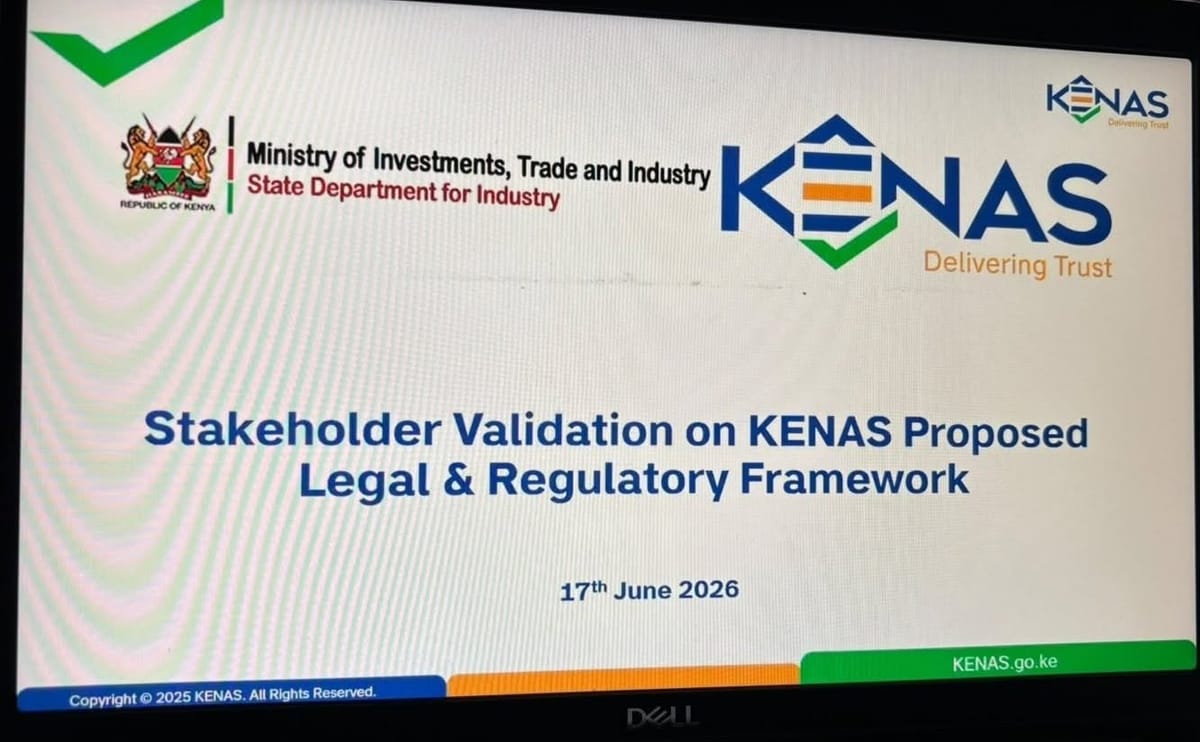
The Kenya Accreditation Service (KENAS), in collaboration with the State Department for Industry, convened a Virtual Stakeholder Validation Forum on the proposed Kenya Accreditation Service (Amendment) Bill, 2026, the Accreditation (General) Regulations, 2026, and the Accreditation (Fees) Regulations, 2026.
The forum brought together representatives from Conformity Assessment Bodies (CABs), government agencies, industry and professional associations, development partners, assessors, and members of the public to review and validate revisions made following the nationwide public participation exercise conducted earlier this year.
The engagement formed an important milestone in the ongoing review of Kenya's accreditation legal framework, aimed at ensuring that the accreditation system remains responsive to emerging national priorities, international best practices, and the evolving needs of stakeholders.
Speaking during the forum, KENAS Chief Executive Officer, Dr. Walter Ongeti, underscored the strategic role of accreditation in supporting national development. He highlighted accreditation's contribution to trade facilitation, consumer protection, regulatory effectiveness, healthcare quality, and the competitiveness of Micro, Small and Medium Enterprises (MSMEs).

Accreditation provides independent assurance of the competence and impartiality of conformity assessment bodies such as testing laboratories, medical laboratories, calibration laboratories, inspection bodies, certification bodies, and proficiency testing providers. Through accreditation, stakeholders gain confidence in the reliability of testing, inspection, calibration, and certification services that support decision-making across various sectors of the economy.
The proposed legislative and regulatory reforms seek to strengthen the accreditation framework by enhancing its effectiveness, responsiveness, and alignment with international standards and best practices. A robust accreditation system contributes to stronger quality infrastructure, facilitates trade, supports regulatory oversight, and promotes confidence in products, services, and systems.
As Kenya continues to strengthen its Quality Infrastructure, stakeholder collaboration remains essential in building an accreditation framework that supports innovation, competitiveness, consumer protection, and sustainable socio-economic development.