Beyond the Certificate: Why Re-Accreditation Matters for Quality Healthcare

The Karen Hospital Laboratory's continued accreditation demonstrates why quality in medical testing must be sustained, not simply achieved.
In healthcare, every laboratory result matters. Behind each sample is a patient awaiting information that may influence a diagnosis, treatment decision or ongoing medical care. The reliability of that information is therefore fundamental to quality healthcare.
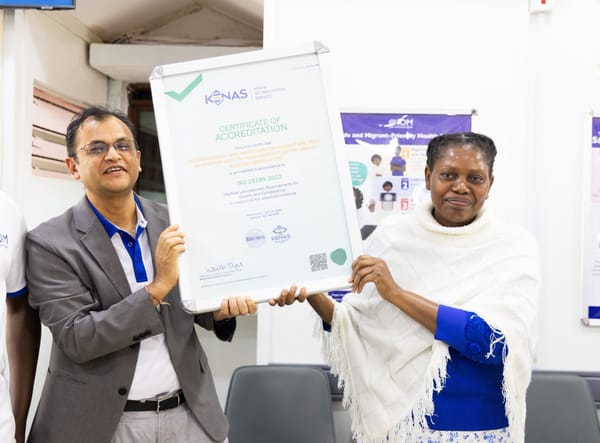
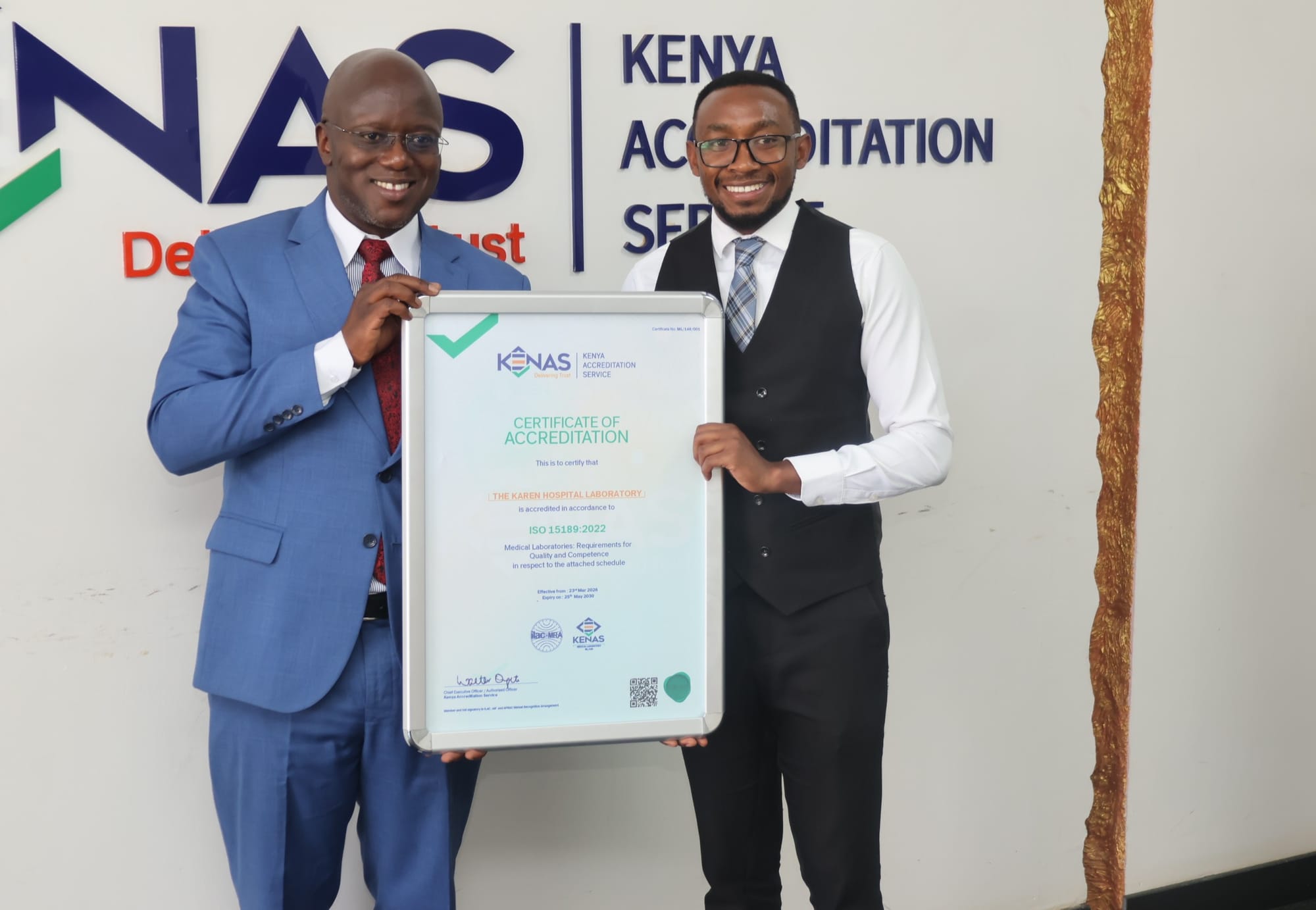
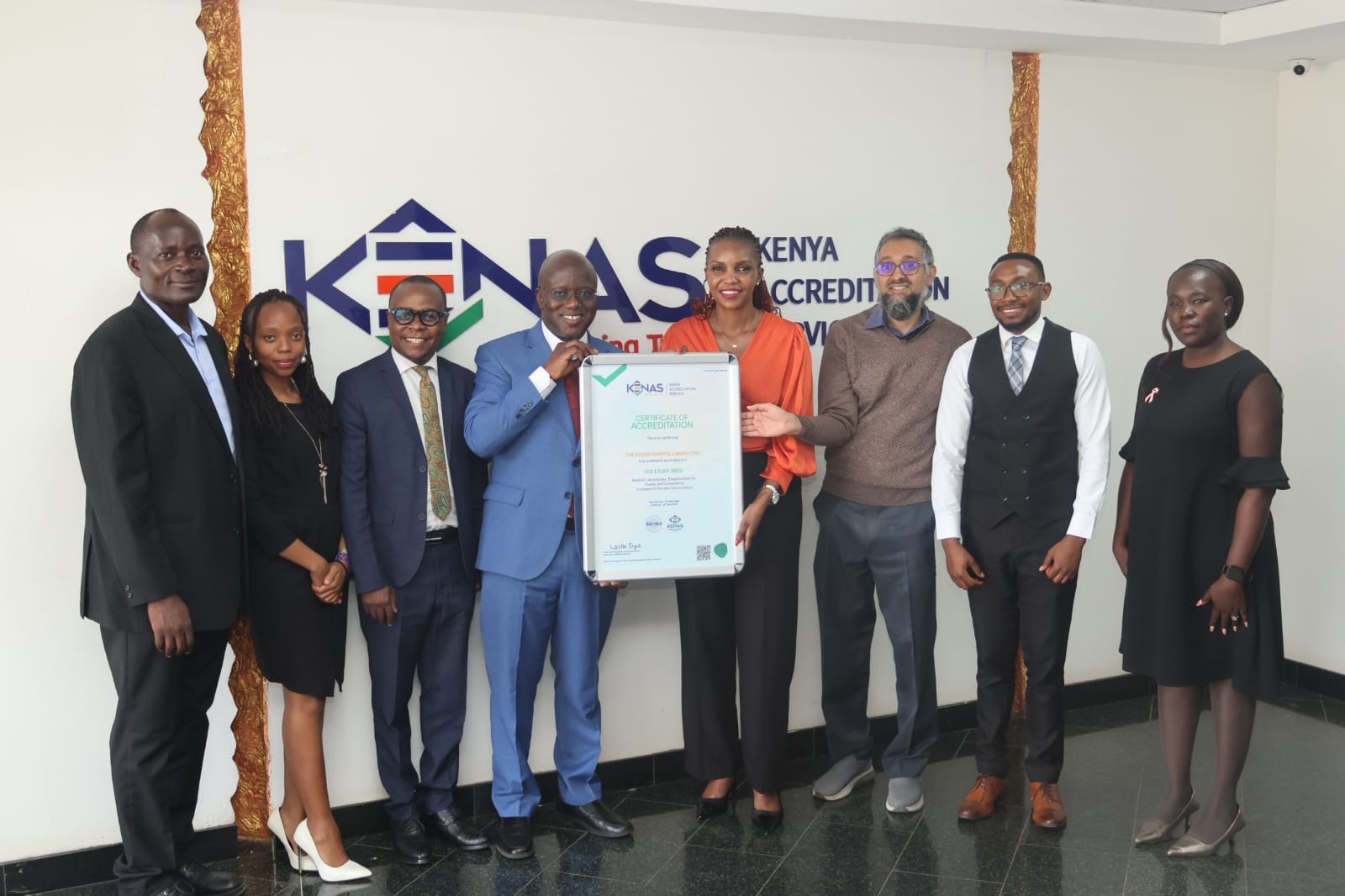
This was the central message during the ceremonial presentation of a re-accreditation certificate to The Karen Hospital Laboratory by the Kenya Accreditation Service (KENAS) on 28 October 2026.
The ceremony recognised the Hospital's continued demonstration of competence under ISO 15189, the international standard specifying requirements for quality and competence in medical laboratories.
Accreditation is a continuing journey
The Karen Hospital Laboratory first attained KENAS accreditation on 26 May 2022 and was successfully re-accredited on 23 March 2026.
While initial accreditation marks an important achievement, re-accreditation carries an equally significant message: maintaining quality requires consistent effort, periodic evaluation and a willingness to improve.
It calls for sustained investment in competent personnel, appropriate equipment, effective management systems and reliable laboratory processes.
For The Karen Hospital Laboratory, whose accredited services include Clinical Chemistry, Haematology and Molecular Biology (Immunology), this commitment supports the delivery of dependable medical testing services.
Re-accreditation is therefore more than the renewal of a certificate. It is recognition of demonstrated competence within an ongoing accreditation cycle.
The value of accreditation ultimately reaches the patient
During the ceremony, KENAS Chief Executive Officer Dr. Walter Ongeti emphasised that the benefits of accreditation extend beyond the laboratory itself.
A laboratory result is not merely a technical output. It provides information that healthcare professionals use in diagnosing conditions, determining treatment options and monitoring patients.
When laboratory services are competent and reliable, they strengthen confidence in the clinical decisions that depend on those results.
Reliable testing can also help reduce the need for avoidable repeat investigations and support more efficient use of healthcare resources. These are important considerations at a time when healthcare providers and patients are increasingly conscious of service quality, affordability and value.
The ultimate significance of accreditation is therefore not the certificate displayed on a wall, but the confidence it helps build in healthcare delivery.

Responding to an increasingly informed patient
Healthcare delivery is changing. Patients have greater access to information, more opportunities to compare services and increasingly high expectations of the institutions entrusted with their care.
Dr. Ongeti welcomed The Karen Hospital's awareness of these wider environmental changes, noting the importance of responding to the expectations of today's informed healthcare consumers.
For healthcare institutions, quality is no longer only an internal operational consideration. It is closely connected to patient experience, trust, institutional reputation and long-term sustainability.
Accreditation provides an independent framework through which laboratories can demonstrate their competence and commitment to recognised requirements.
However, accreditation must also be reflected in everyday service delivery. Patients and healthcare professionals experience quality through the consistency, reliability and responsiveness of the services they receive.

Looking beyond the existing accredited scope
One of the significant outcomes of the ceremony was The Karen Hospital's expression of interest in expanding its accreditation.
The Hospital's delegation, led by Ms. Penina Ndonga, representing the Chief Executive Officer, indicated that the institution is looking to extend the scope of its accredited laboratory services.
The Hospital also intends to explore accreditation for laboratories in its other branches in the coming year.
This ambition reflects a broader understanding of accreditation as an investment in institutional capability and patient confidence rather than merely a compliance requirement.
Dr. Ongeti welcomed the proposed expansion and encouraged the Hospital to continue strengthening its quality systems as it broadens its services.
Any extension of accreditation would be subject to the applicable KENAS assessment and approval processes.
Quality is everyone's responsibility
Maintaining accreditation requires more than the efforts of a laboratory's quality assurance personnel.
It depends on the commitment of hospital leadership, laboratory management, technical professionals and supporting functions.
The Karen Hospital delegation included Dr. Anderson Mugo, representing the Medical Director; Dr. Hussein Jonoowalla, Laboratory Director; Mr. Victor Mutinda, Quality Assurance Manager; and Ms. Rose Nabiswa, representing Business Development.
Their participation reflected the institutional dimensions of quality management, bringing together clinical leadership, laboratory operations, quality assurance and organisational development.
A strong quality culture is demonstrated when management provides the necessary resources, personnel maintain competence, processes are consistently followed and improvement becomes part of everyday operations.
Importantly, quality must be experienced by the people receiving the service. Patient satisfaction and confidence are important indicators of service performance, alongside the technical and management requirements assessed through accreditation.

KENAS's contribution to quality healthcare
As Kenya's national accreditation body, KENAS provides independent and impartial assessment of the competence of conformity assessment bodies, including medical laboratories.
Through ISO 15189 accreditation, KENAS contributes to strengthening confidence in the competence of laboratories undertaking specified medical testing activities.
This confidence supports healthcare professionals, patients, regulators and other stakeholders who depend on reliable laboratory services.
The re-accreditation of The Karen Hospital Laboratory demonstrates the importance of maintaining that confidence over time.
As the healthcare sector evolves, the need for competent, responsive and continuously improving laboratory services will remain central to patient care.
Quality is not a destination reached when an accreditation certificate is issued. It is a journey sustained through competence, accountability, continual improvement and the confidence of those served.